
A kitchen or bath quote goes cold when nothing records what happens to it after the showroom visit. Following a quote up well takes two things: a schedule in which every open quote carries a dated next touch with a reason, running until the homeowner signs or gives a clean no, and a quote-to-signed rate counted by the month each quote was issued, not the month it was signed. For kitchen and bath businesses with a showroom, this is follow-through, stage 04 of the Showroom Pipeline we build.
Why do quotes go quiet after the showroom visit?
Quotes go quiet after the showroom visit because the homeowner’s decision slows down at the same moment the firm’s attention moves on. The design appointment is the high point. Then the homeowner goes home with a number, a partner who may not have been in the room, and a decision worth $40,000 or more that nobody makes in a week. Silence from the homeowner is normal. The trouble is on the firm’s side: the designer is already preparing next week’s appointments, and follow-up depends on whichever person remembers. When that person is busy, the quote does not get a no. It gets nothing.
How do you tell a stalled quote from a slow one?
A stalled quote and a slow one can only be told apart by a record of the next agreed step, because from outside both look like silence. A slow quote has a next touch with a date and a reason: call after they have seen tile elsewhere, send the revised layout once the island is settled. A stalled quote has no next touch, or one that passed without an answer. On a three-to-nine-month cycle, a four-month-old quote is not a warning sign by itself. A four-month-old quote with nothing scheduled is.
That is what the open-quote view is for: every open quote, its age in days, its last touch and its next one. A quote with no next touch is stalled by definition and needs one the same day.
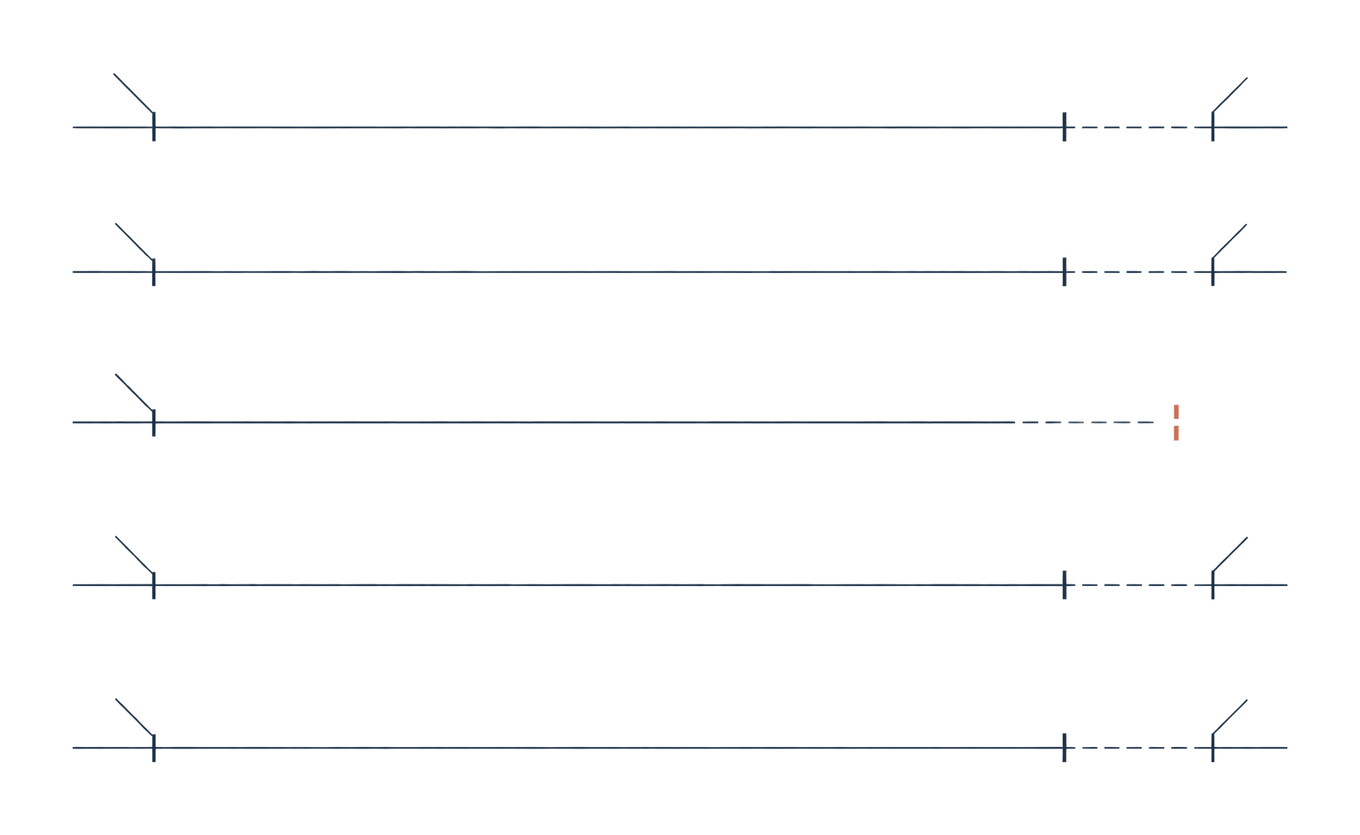
A follow-up schedule where every touch has a reason.
Every follow-up touch should carry a reason the homeowner can see, because a message that only checks in asks for attention and gives nothing back. Touches sit closer together after the quote, further apart mid-cycle, and closer again as the homeowner’s target date approaches. Text messages belong in the schedule only where the homeowner agreed to them, which is simplest to capture at booking. The schedule we build runs on five points.
-
Samples going out start their own follow-up. A homeowner who takes door samples or a countertop piece home has a question waiting: how they looked in the room. Recording a date to ask it turns a loan of samples into the next conversation.
-
The first touch after the quote answers questions rather than asking for a decision. A few days in, walk through what the quote contains and what changed since the design appointment. Asking for a signature this early reads as pressure.
-
Every touch in the middle carries something new. A revised drawing, an answer to a question raised at the table, a scope change the homeowner mentioned. With nothing new to send, the touch is a call with a specific question.
-
The schedule follows the homeowner’s timeline, not a fixed cadence. Someone who wants to be cooking in the new kitchen by next autumn has given a date the follow-up can be worked back from.
-
The last touch asks for the decision plainly. Once the quote is older than its timeline, the message asks whether the firm is still in the running, and if not, what decided it.
Is a clean no worth asking for?
A clean no is worth asking for because it closes the quote, frees the designer for quotes that can still be signed, and comes with a reason that silence never provides. Every quote should end signed or in a clean no, with the reason for a no in the same field every time: price, timing, another firm, scope changed, project cancelled. A run of price reasons points back at qualification and the budget conversation in how to qualify a $40,000 kitchen before the design appointment, which is why we read the two stages together. Asking also gives the homeowner permission to end a conversation they may have been putting off. And “try us again in the spring” is not a no. It is a slow quote with a new date.
How to count the quote-to-signed rate on a long cycle.
The quote-to-signed rate is the share of quotes issued in a given month that end in a signed contract, found by following that month’s quotes forward until each is signed or closed with a clean no. Dividing jobs signed this month by quotes issued this month describes no real group of quotes, because on a three-to-nine-month cycle this month’s signatures came from earlier months.
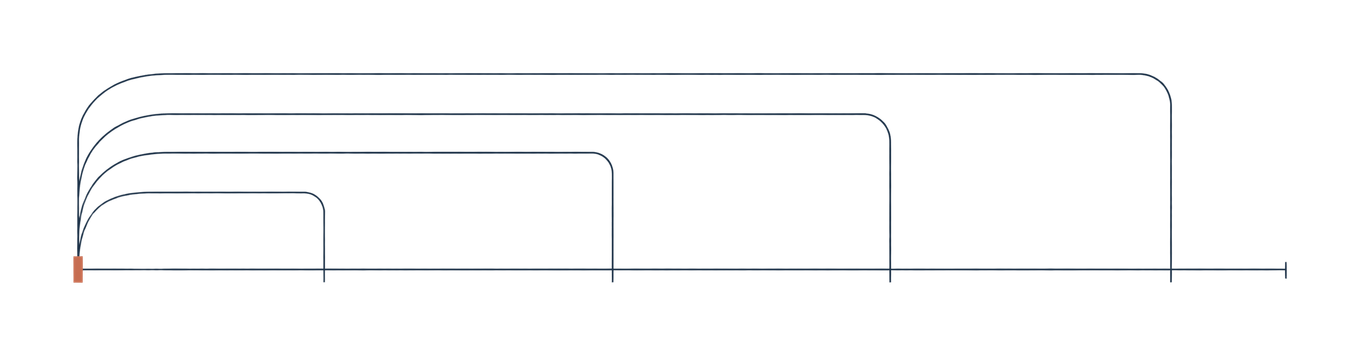
Here is the arithmetic, worked as an example rather than a claim about anyone’s actual numbers. It continues the firm from what a booked design appointment costs in North Jersey, which spent $12,000 in a month and got 24 kept design appointments, a count that depends on the appointment-kept rate covered in design appointment no-shows. Say those appointments produce 20 quotes, all issued in March. Over nine months the March cohort resolves: 5 signed, 15 closed with a clean no, none open. The March quote-to-signed rate is 5 of 20, or 25 percent. Without the clean nos, 15 quotes would still read as open and the rate could never be called final.
Now count the other way. In August the firm issues 10 new quotes and signs 6 jobs from spring quotes, so signed over quoted reads 60 percent. In October it issues 30 and again signs 6, and the ratio reads 20 percent. The follow-up did not change; the number of new quotes did.
Why cost per signed job lags spend.
Cost per signed job lags spend because the signatures that price a month’s marketing arrive three to nine months after the money goes out. Cost per signed job is the marketing spend behind a month’s quotes divided by how many of those quotes were signed, and with a $15,000 to $50,000 average job it is the acquisition figure that belongs in the same sentence as margin. For March, it reads $12,000 after the first signature, $6,000 after the second, and settles at $2,400 once all five are in.
The same March, counted in full:
- $12,000 of spend, 24 kept design appointments, 20 quotes issued
- after nine months: 5 signed, 15 clean no, 0 open
- quote-to-signed rate for the March cohort: 25 percent
- cost per signed job for March: $2,400
- 6 signatures in a month over 10 new quotes: 60 percent; over 30: 20 percent
A budget cut in March therefore looks free through the summer, because winter quotes keep signing, and shows up only when the thinner cohorts it produced start to close.